

Design & Architecture
The Right Roof for Your Home's Architecture
The roof is the largest visible surface on most luxury homes. When it fits the architecture, the whole house looks intentional. When it doesn’t, even an expensive roof can look out of place.
There’s rarely one “best” material. Most home styles have two or three roofing systems that suit them, each with its own look, weight and budget. Choosing between them comes down to the details of your home and how you live in it.
We install every major luxury roofing system across Southlake, Westlake, Colleyville and Flower Mound. Here’s how we match materials to the architectural styles we see most in DFW.
The short version: Start with your home’s style, then narrow by structure, HOA rules and budget. The right roof is the one that looks like it was always meant to be there.
Mediterranean, Spanish Revival and Tuscan
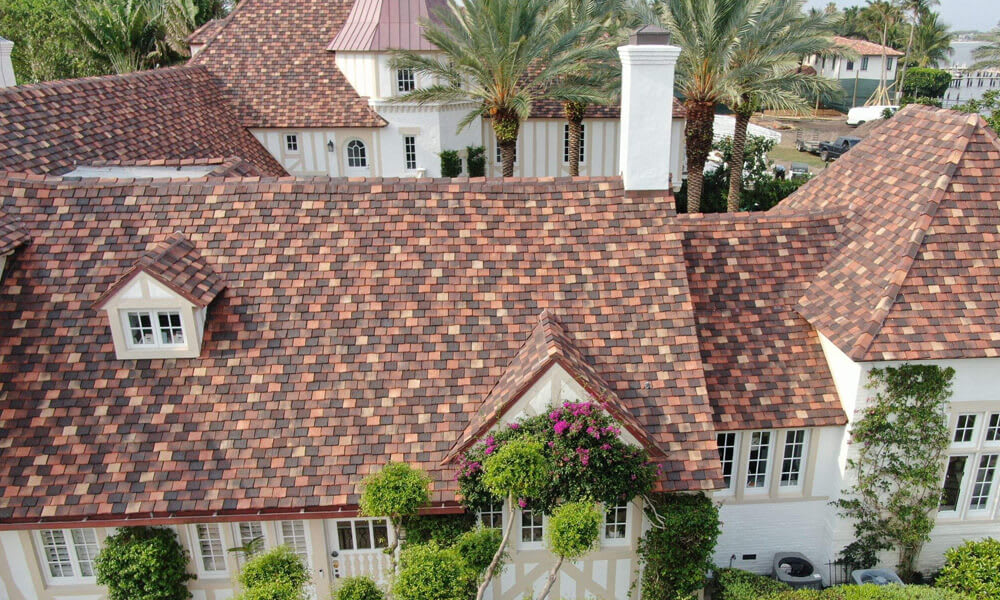
These homes are defined by stucco walls, arched openings and low-pitched, hipped roofs. The roof is a major part of the look, so the tile profile matters.
- •Clay barrel tile brings deep shadow lines and fired color that won’t fade.
- •Composite barrel tile delivers the full barrel profile with Class 4 impact resistance, no breakage and a fraction of the weight.
- •Concrete tile offers the shape at a lower cost, in a wider range of colors.
Finish with copper or color-matched gutters and decorative ridge details.
French Country and Chateau

Steep pitches, dormers and turrets make the roof the star of these homes. They call for a material with texture and a stately, layered look.
- •Natural slate brings quarried stone texture that lasts generations.
- •Terra cotta slate-style tile pairs a slate profile with the color and character of fired clay.
- •Composite slate offers rich color blends, Class 4 impact resistance and a lighter weight that suits complex, many-faceted roofs.
Copper is at home here on turrets, dormers, bay windows and gutters.
Tudor and English Manor

Steep gables, half-timbering and tall chimneys define these homes. The roof should feel heavy and handcrafted.
- •Natural slate in a graduated or variegated pattern suits the Old-World character.
- •Composite slate or shake delivers deep texture and variegated color with strong hail resistance.
- •Wood-look shake profiles suit cottage-style versions of the style.
Modern Farmhouse

Clean gables, board-and-batten siding and black-and-white palettes are the signature. Simple, crisp roof lines want a simple, crisp material.
- •Standing seam metal is the defining look, often in black, dark bronze or charcoal.
- •Designer architectural shingles work on the main roof, paired with metal over porches.
- •Mixed systems combine shingle or slate on the main roof with standing seam accents.
Contemporary and Modern
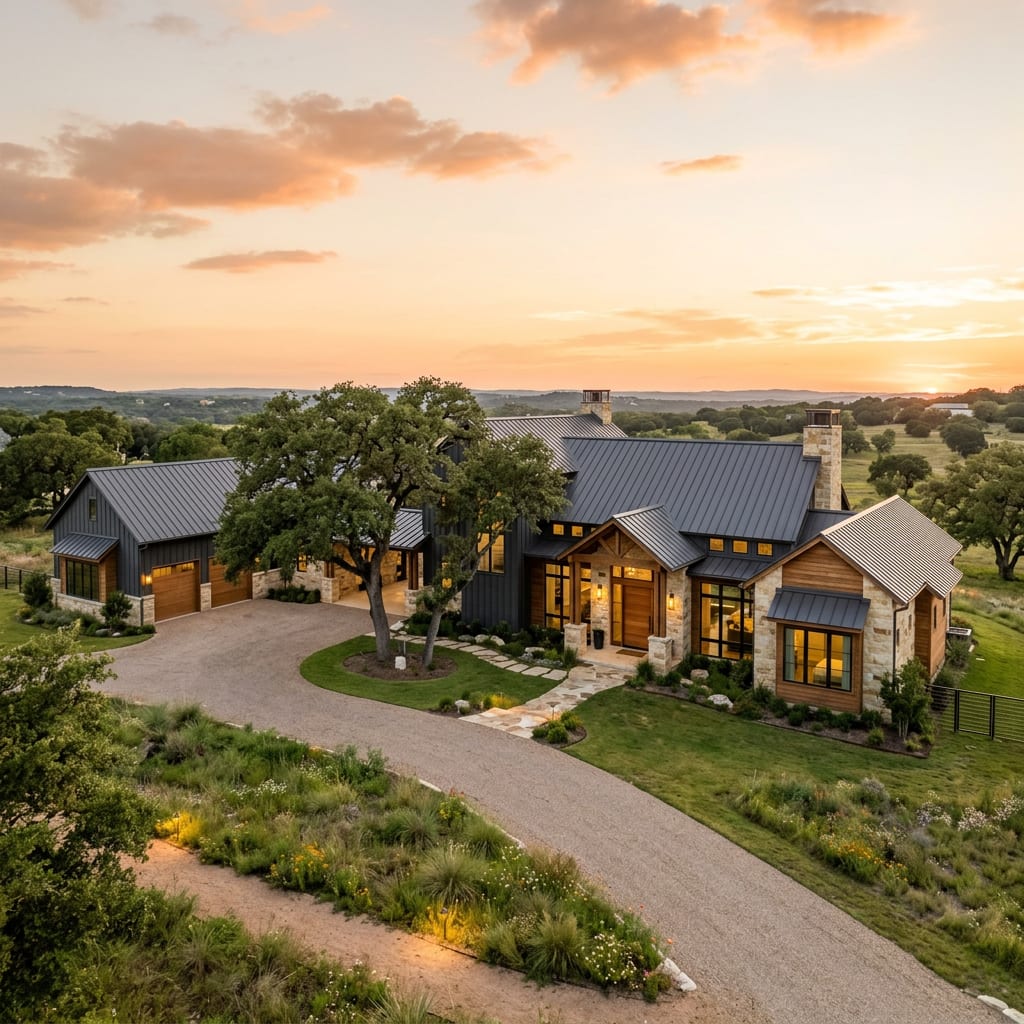
Flat planes, shed roofs and large glass walls leave little room for ornament. The roof should look sharp from every angle, including from above.
- •Standing seam metal suits low slopes and long, uninterrupted runs.
- •Low-slope membrane systems (TPO) handle flat sections and roof decks.
- •Flat or slate-style tile works where the design calls for texture.
Traditional and Transitional
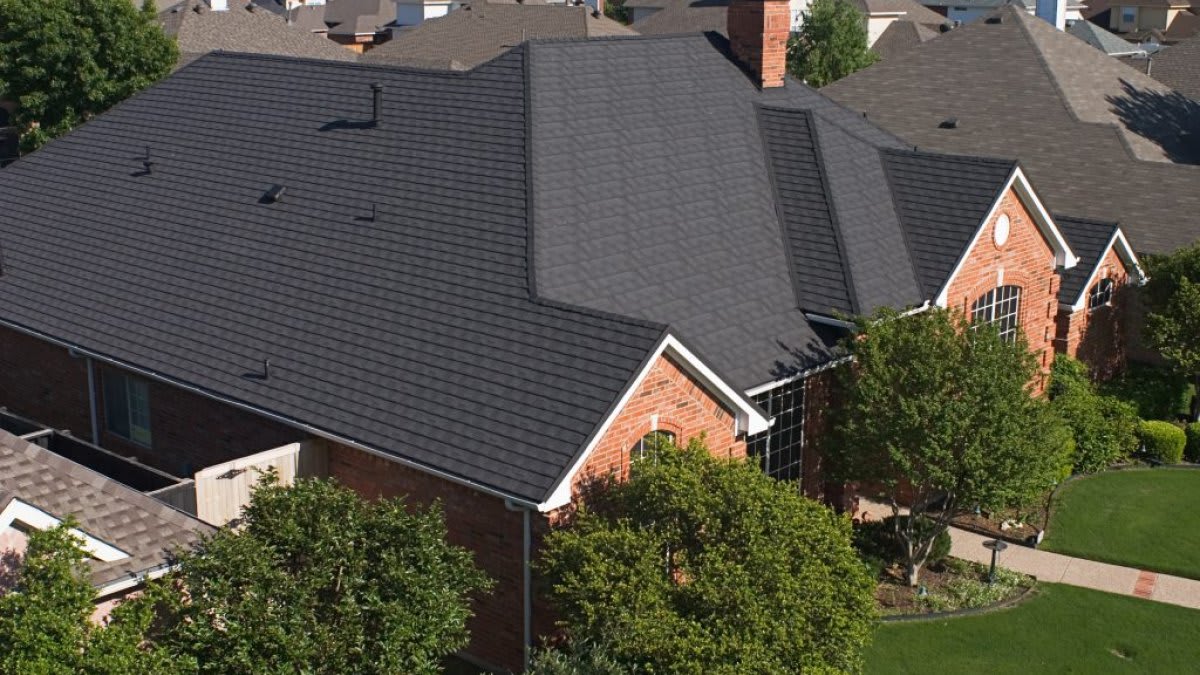
These are the most flexible styles, and most DFW homes fall here. Nearly every system can work, so priorities like hail resistance, HOA rules and budget drive the choice.
- •Composite slate or shake adds a premium look with strong impact ratings.
- •Stone-coated steel offers tile or shake profiles with the strength of metal.
- •Designer architectural shingles are the budget-friendly option that still looks upscale.
Texas Hill Country
Limestone walls, deep porches and rustic timber are typical. The roof should feel durable and at home in the landscape.
- •Standing seam metal in weathered or earth tones is the regional signature.
- •Stone-coated steel gives a similar rugged look in tile or shake profiles.
Beyond Style: What Narrows the Choice
Once you know which materials suit your home, four factors usually decide the final pick:
- 1Structure. Clay tile and natural slate are heavy. Your framing may need review before switching from a lighter roof.
- 2HOA rules. Your architectural committee may limit materials or colors. Our HOA approval guide walks through what review boards look for.
- 3Hail. Many systems carry a Class 4 impact rating, which can lower insurance premiums in Texas.
- 4Budget and lifespan. Higher upfront cost often brings a longer life and lower upkeep.
Frequently Asked Questions
Find the Roof Your Home Was Meant to Have
Every DW Construction project starts with a material consultation, not a quote sheet. We walk your home, review your architecture and HOA guidelines, and show you the systems that fit. Call 972-213-5496 or schedule a consultation.
Others Compete on Price. We Compete on Craft.