

Craftsmanship & Process
What's Under a $100,000+ Roof: A Layer-by-Layer Tour
The Part of Your Roof You'll Never See
From the street, every new roof looks good on the day it's finished. The difference between a roof that lasts 50 years and one that leaks in five is almost always underneath, in layers no homeowner ever sees.
So we're going to show you. This November we replaced a storm-damaged asphalt roof in University Park, Dallas, with Brava Single-Width Slate. It's a steep 14/12 roof with 37 facets, 23 valleys and 18 hips: the kind of roof where shortcuts show up fast. Here is every layer, from the deck up, with photos from the job.
Layers 1–2: Down to the Bare Deck
We tore the old asphalt system off completely, down to the wood deck. No roofing over old roofing, and no guessing about what's underneath.
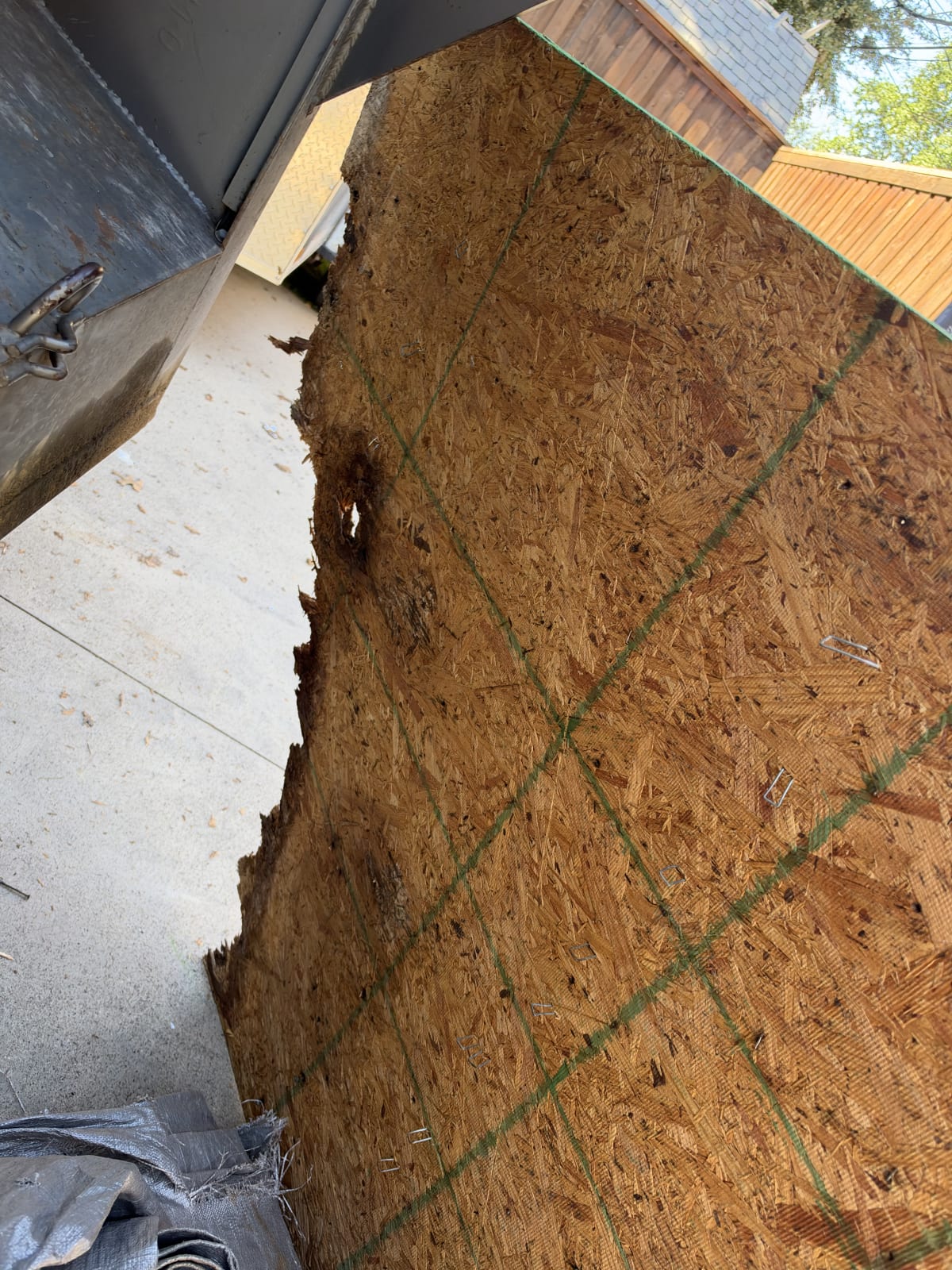
Then we inspected every sheet of decking. A slate roof is a 50-year decision, and it's only as solid as the wood it's fastened to. On this roof, that inspection found rotted sheathing, which came out and was replaced before anything new went on.
Layer 3: Ice and Water Shield on the Entire Deck
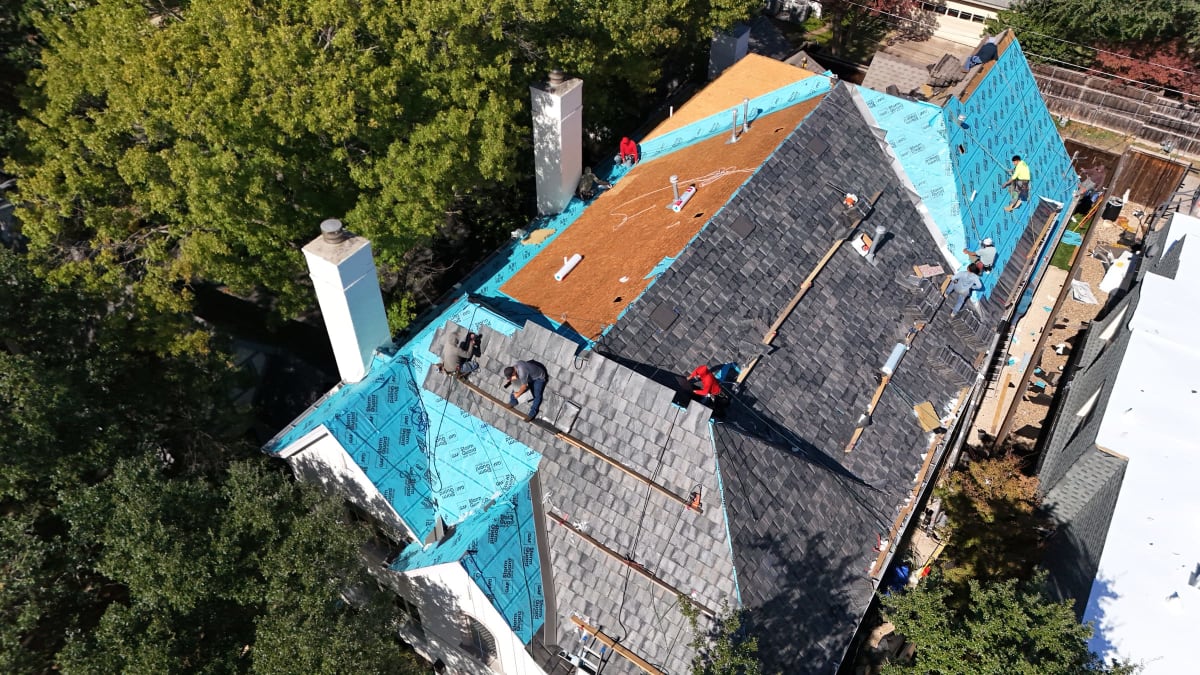
This is the layer most homeowners have never heard of, and the one we refuse to skimp on. Ice and water shield is a self-sealing membrane that bonds to the deck and seals around every nail. If wind-driven rain ever gets past the roof surface, this is what stops it.
Many roofs only get it in the valleys and around penetrations, with cheaper felt everywhere else. On this roof, high-temperature ice and water shield covers the entire deck, edge to edge. In a Texas summer, that matters: it's built to hold up under the heat that builds beneath a roof.
Layer 4: 24-Gauge Valley Metal in All 23 Valleys
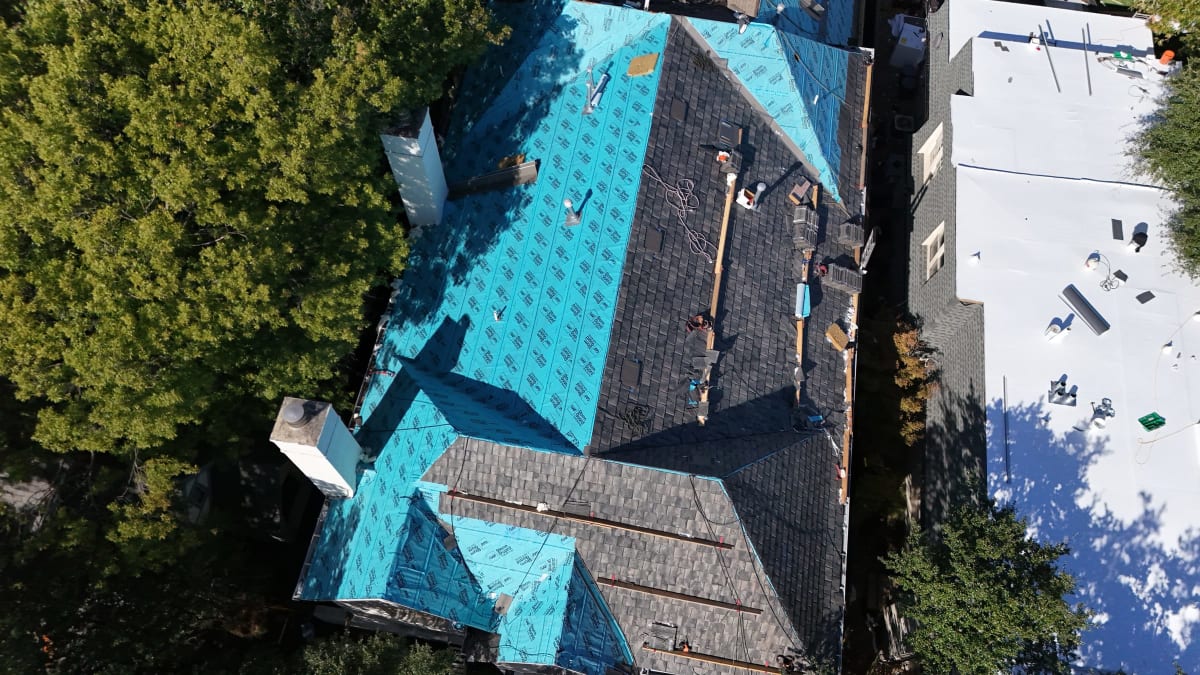
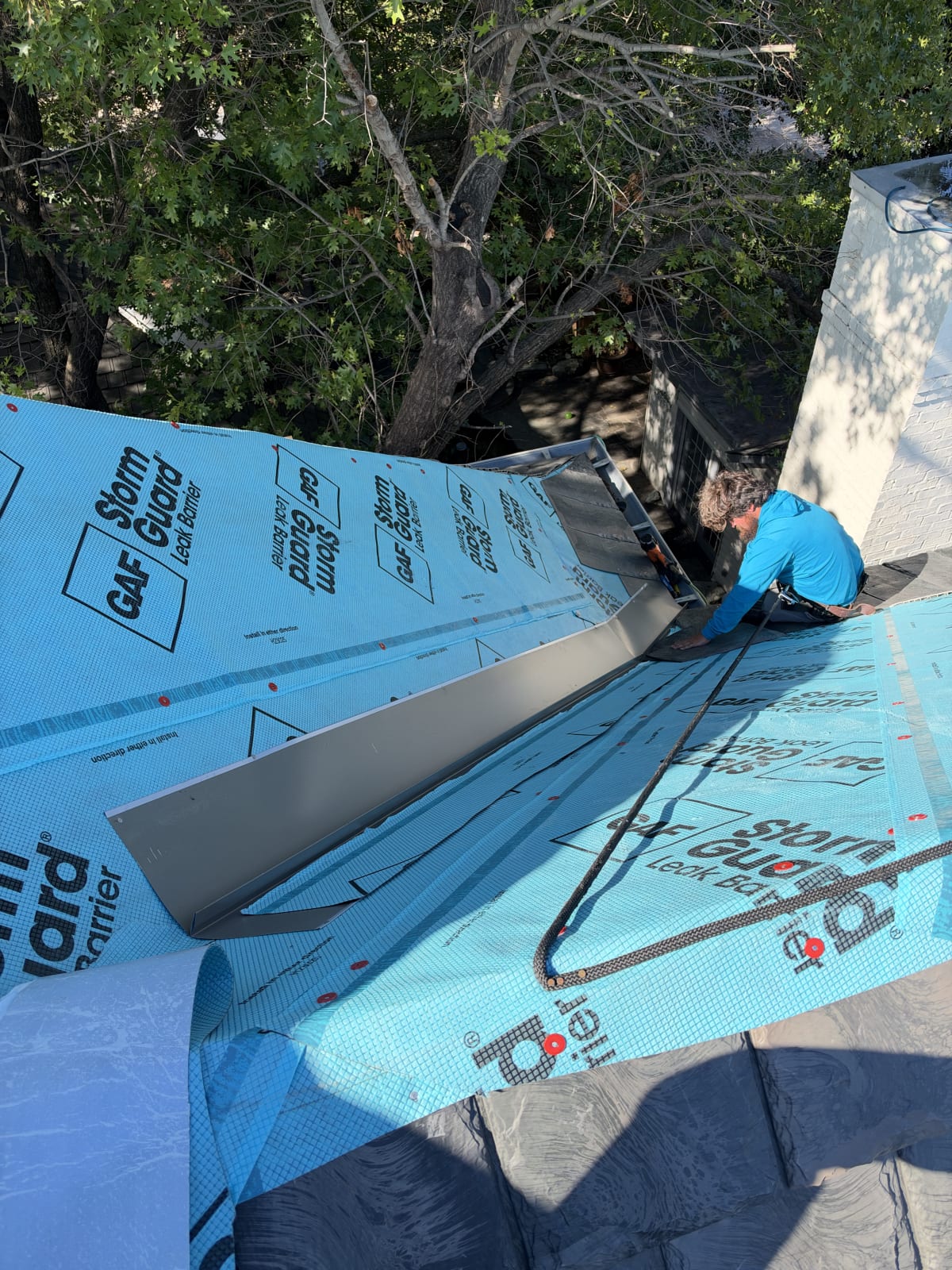
Valleys are where two roof slopes meet, and they carry more water than any other part of a roof. On a roof with 23 of them, the valleys are where a leak is most likely to start.
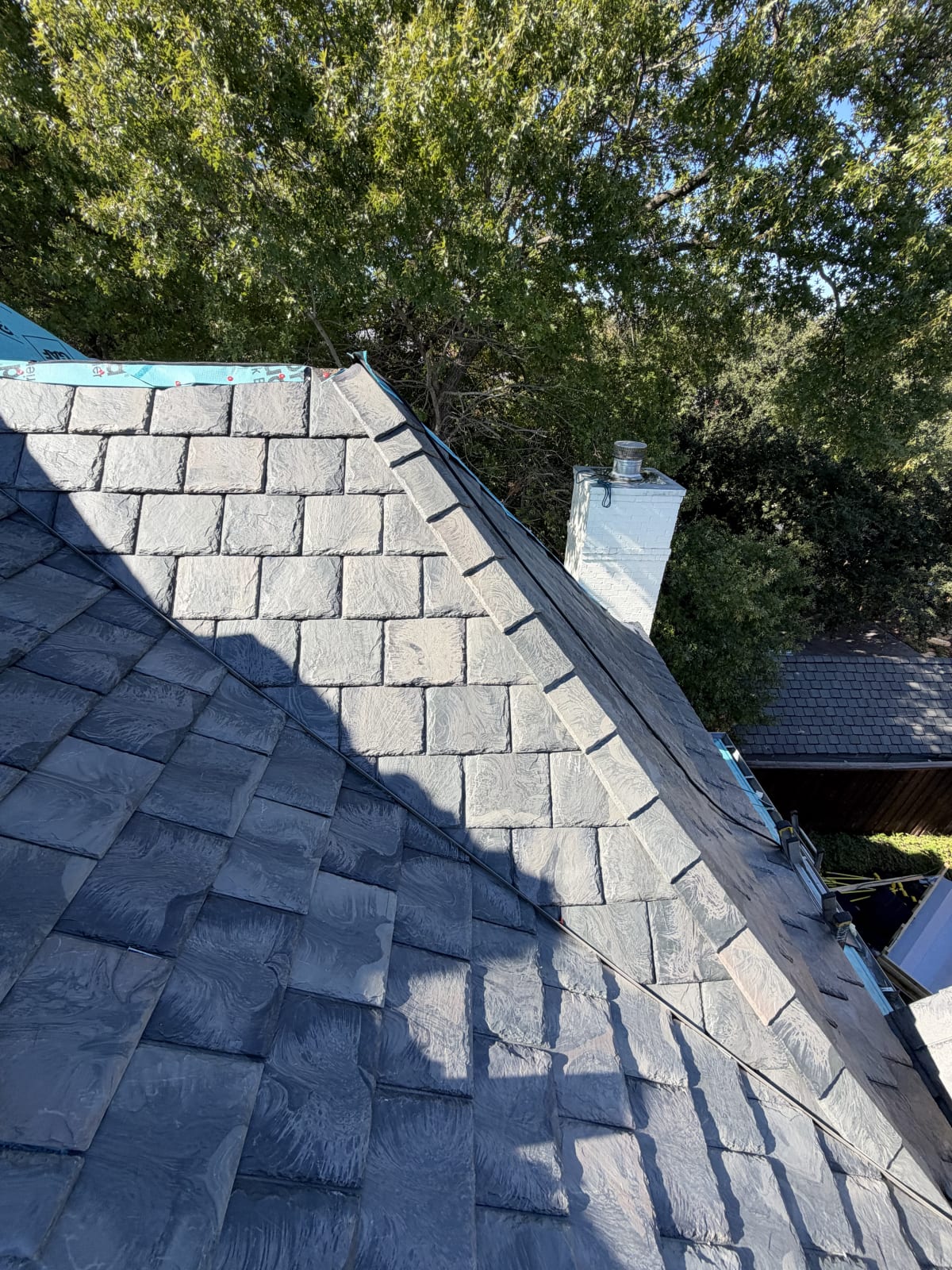
We lined every valley with 24-gauge Paint Grip valley metal before a single slate went down. The lower the gauge number, the thicker the steel, so 24-gauge is a heavier metal channel built to carry water for the life of the roof.
Wondering what's under your roof?
Every DW inspection is photo-documented, so you see exactly what we see. Book a free inspection →
Layers 5–6: The Slate, Laid Out Before It's Fastened
The homeowner chose Brava Single-Width Slate in Washington. One uniform tile width gives clean, even rows that suit the steep, formal rooflines of the Park Cities. It has a Class 4 impact rating, the highest hail rating available, and a 50-year limited transferable warranty.
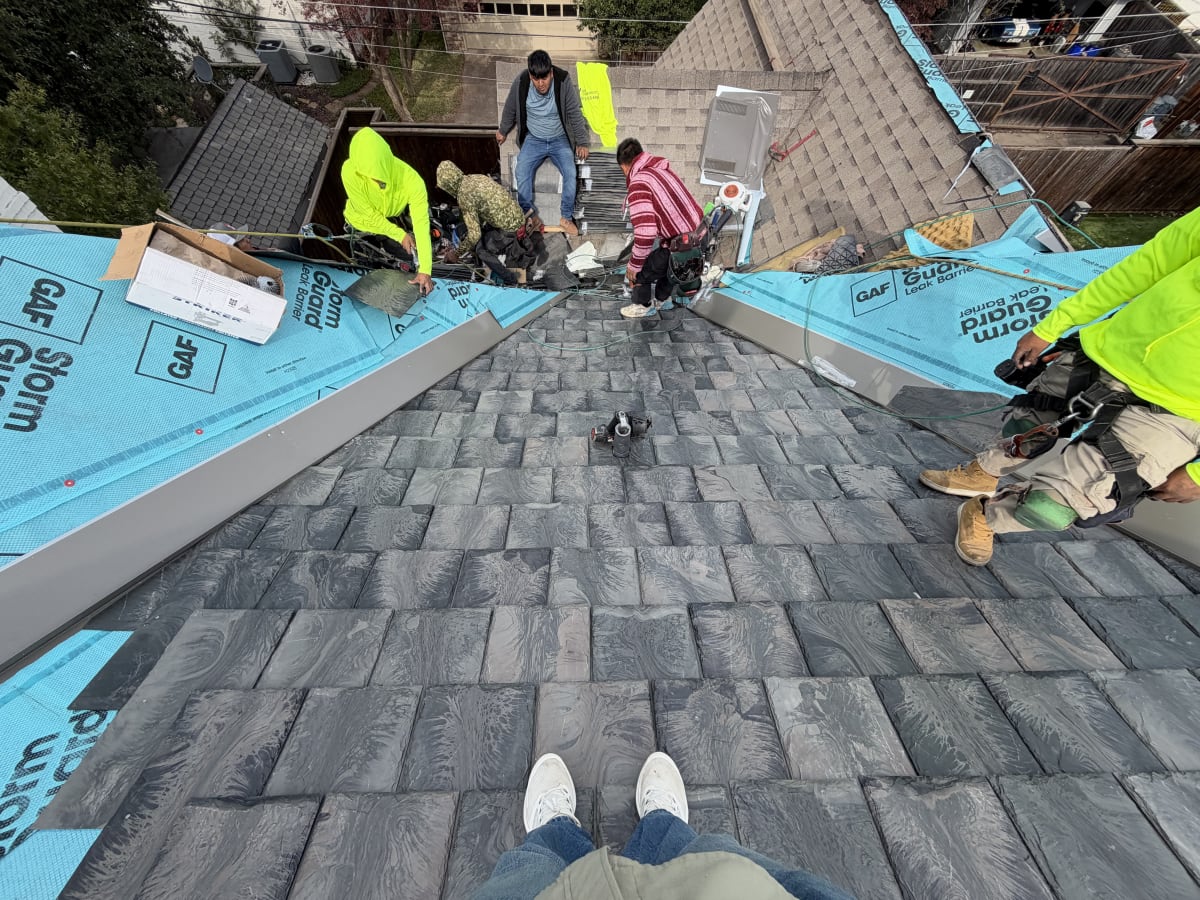
We installed it to Brava's specification at a 10-inch exposure. Before the first tile was fastened, we laid out the coursing across the roof so every row lines up straight through hips and valleys.
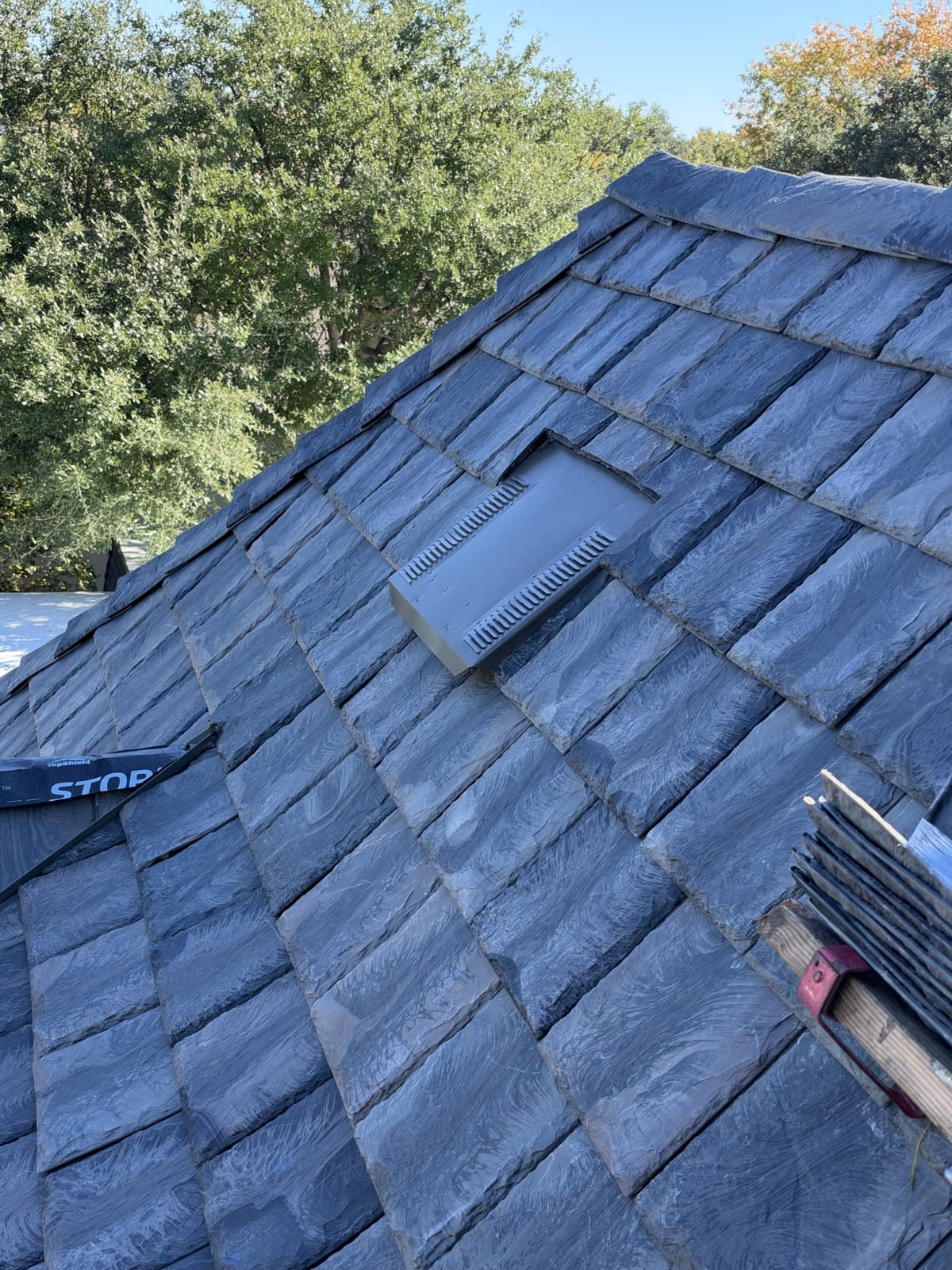
For ventilation, O'Hagin low-profile vents replaced the old roof vents. They sit nearly flush in the slate, so nothing breaks up the roofline from the street.
Layer 7: Gutters That Fit the Architecture
A luxury roof deserves gutters that match it. We replaced the old gutters with half-round aluminum gutters and downspouts throughout, a classic profile that suits this home better than standard box gutters. At the front of the house, where it's seen from the street, two gutters and two downspouts are copper.
After the Last Tile: What You Keep
Most roofers hand you an invoice when they finish. Here's what this homeowner got:
- •A photo record of every layer: a CompanyCam link documenting each step of the installation, including all the layers above that are now hidden for good.
- •A lifetime workmanship warranty from DW Construction, on top of Brava's 50-year limited transferable material warranty.
- •A 6-month reinspection. We come back after the roof has been through a season to check it again.
The patchwork asphalt is gone. The home now has a uniform slate roof, a fully sealed deck beneath it and gutters that suit its architecture. With a Class 4 roof overhead, the homeowner is out of the storm-repair cycle. See the full University Park project.
Ask What's Under the Roof Before You Sign
When you compare roofing bids, don't just compare the shingle or tile on top. Ask each contractor three questions: Is ice and water shield going on the whole deck or just the valleys? What gauge is the valley metal? Will I get photos of every layer?
If you're in Southlake, Westlake, Colleyville, the Park Cities or anywhere in Dallas–Fort Worth, we'll walk your roof and show you exactly what we'd put under it. Learn more about our Brava slate roofing.
Others compete on price. We compete on craft.
Ask what's under the roof before you sign
We'll walk your roof, photograph what we find, and show you exactly what we'd put under it.