LUDOWICI
Ludowici Tile, and Why It Is Still on DFW Roofs
Ludowici tile is natural terra cotta clay, kiln-fired — not concrete and not a composite. It is the clay tile you will find on the oldest tiled roofs still standing in Fort Worth, and it is still in production today, made in New Lexington, Ohio, at the same plant the company has operated since 1909.
The color is the first thing to understand, because it is the reason these roofs have not faded since before the war. On glazed Ludowici products, the color is a ceramic glaze kiln-fired at extreme temperature so it fuses into the tile. On natural unglazed terra cotta, the color is the fired clay body itself and runs all the way through. Either way the color is not a surface coating — which is why nothing painted or coated will ever match one of these roofs, and why a Ludowici roof installed in the 1920s still holds its color.
Every Ludowici tile is ASTM C1167 Grade 1 certified — the highest of three grades for weathering and breakage resistance. Grade 1 tile absorbs under 2% of its weight in water, and absorbed moisture is exactly what cracks and spalls clay tile during freeze-thaw, so that low absorption is the whole reason these roofs survive North Texas winters. The tile carries a Class A fire rating, and Ludowici backs it with a 75-year warranty against manufacturing defects from initial installation.
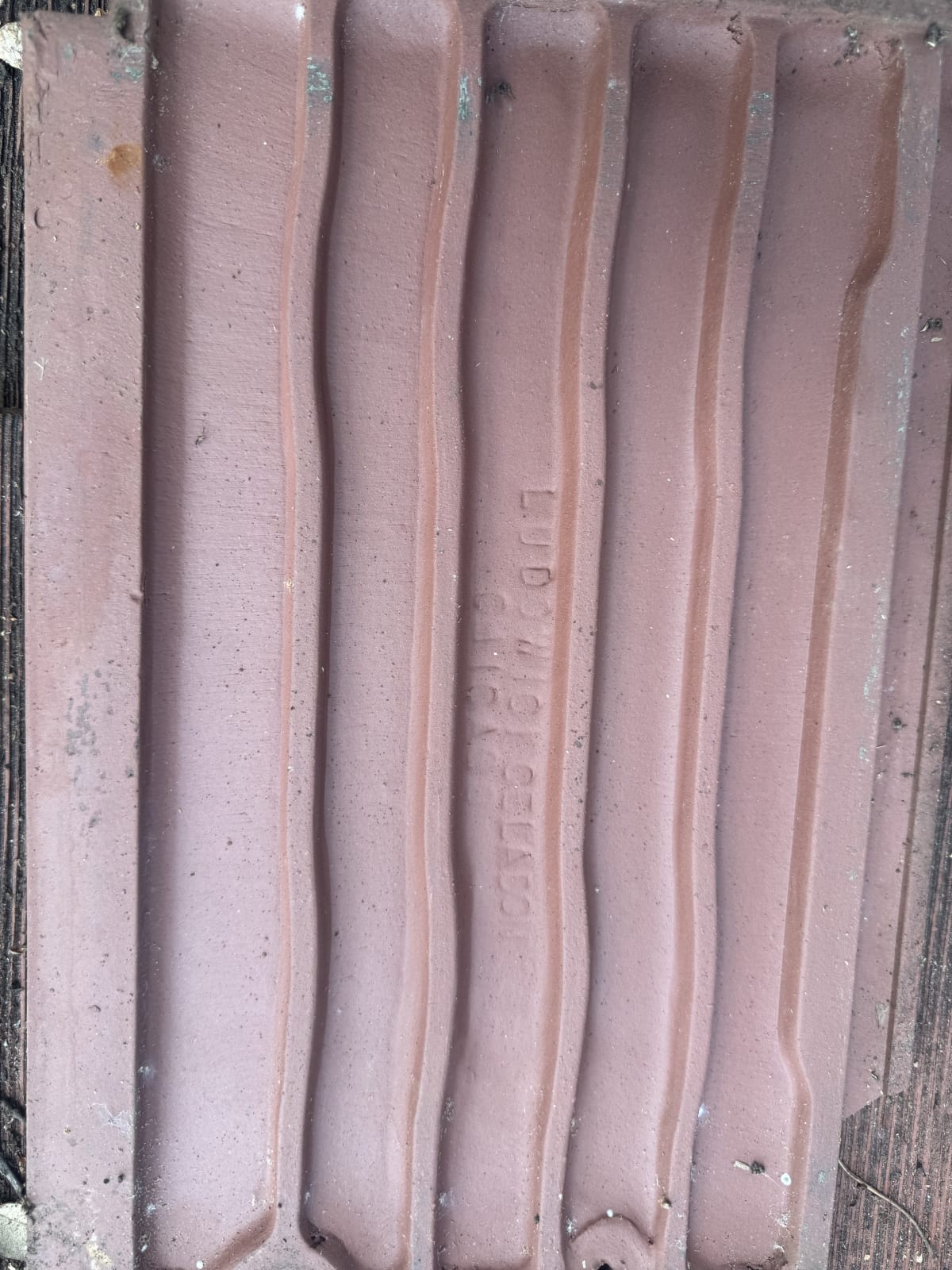
One detail we check on every inspection: the stamp on the underside of the tile. “Ludowici-Celadon” is not a product line — it is the company’s former name. The Ludowici and Celadon companies merged in 1906 to form Ludowici-Celadon, and the company carried that name until 1994, when it became Ludowici Roof Tile. So a tile stamped Ludowici-Celadon on the underside was manufactured between 1906 and 1994. On a pre-war Fort Worth estate, that stamp usually means you are looking at the home’s original roof.
The “LUDOWICI-CELADON” stamp impressed into the underside of a tile taken off a Westover Hills roof — the mark we look for first on every inspection.
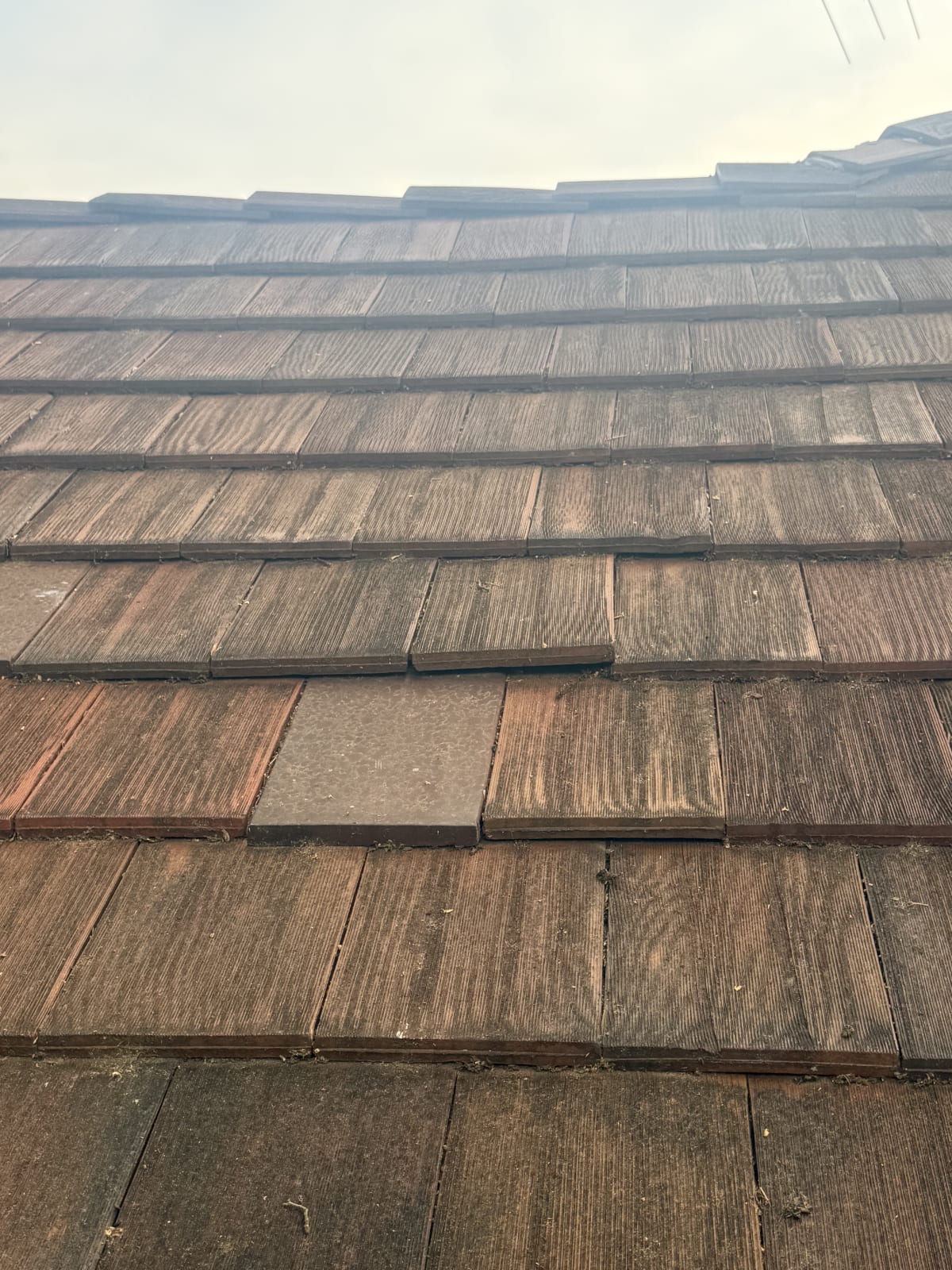
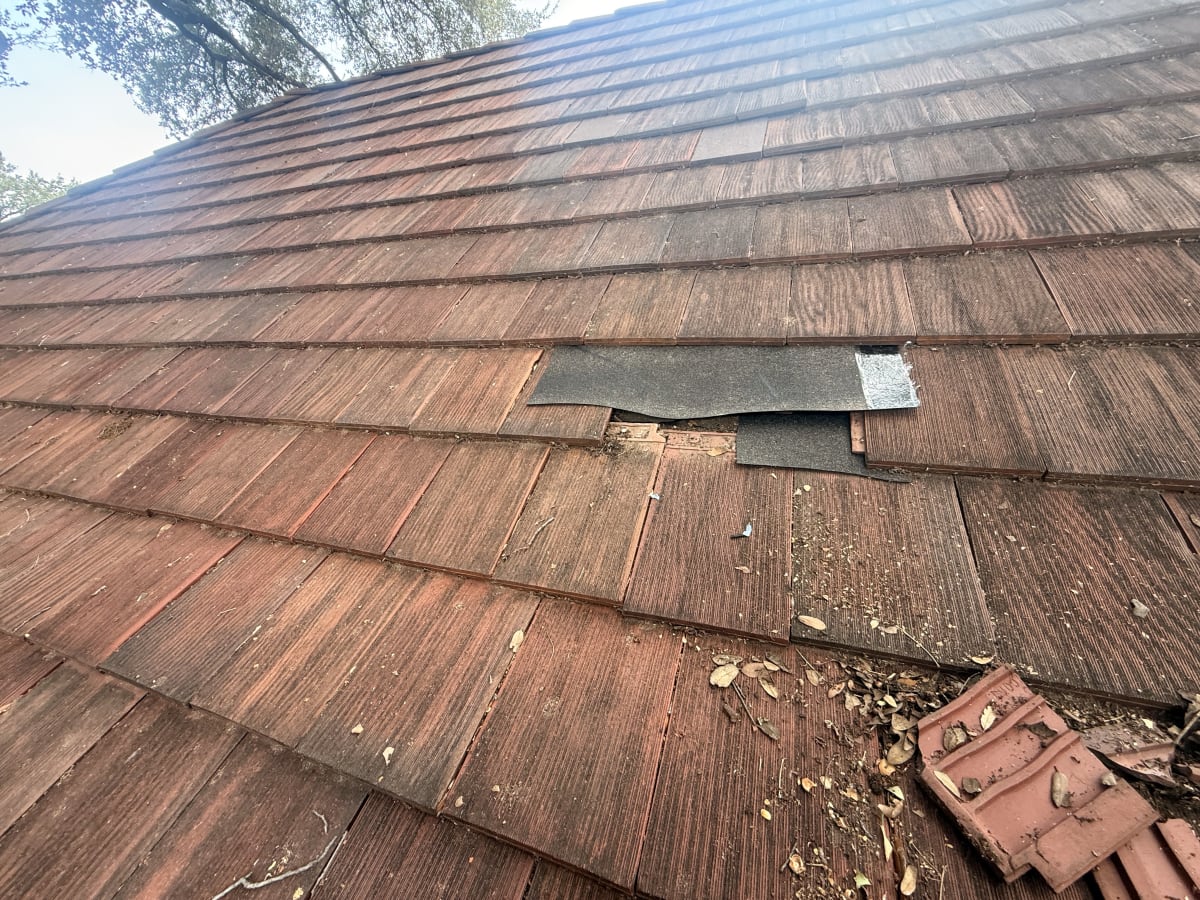
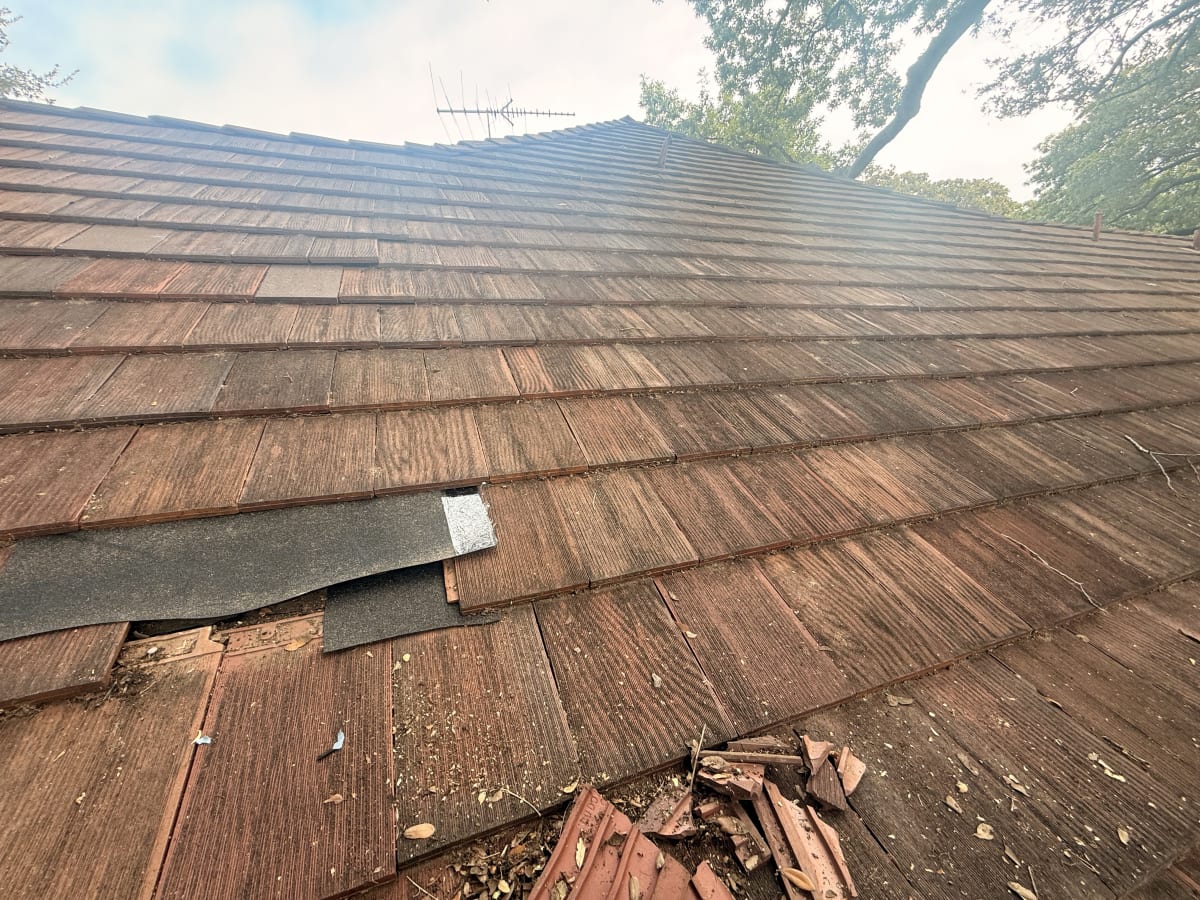
Ludowici sorts its shake-look tile into two families, and the distinction matters when you are matching an old roof. “Shake tile” is a current category containing only modern interlocking products. “Shingle tile” is the family that historic shake-profile tile belongs to — a list of roughly a dozen older profiles, each with its own dimensions and texture. The shake-profile shingle tile we repaired on a recent Westover Hills roof belongs to that older shingle-tile family, not to the modern interlocking shake category. We identify the exact profile from the tile itself rather than guessing, because a wrong profile reads as a patch from the street forever.